
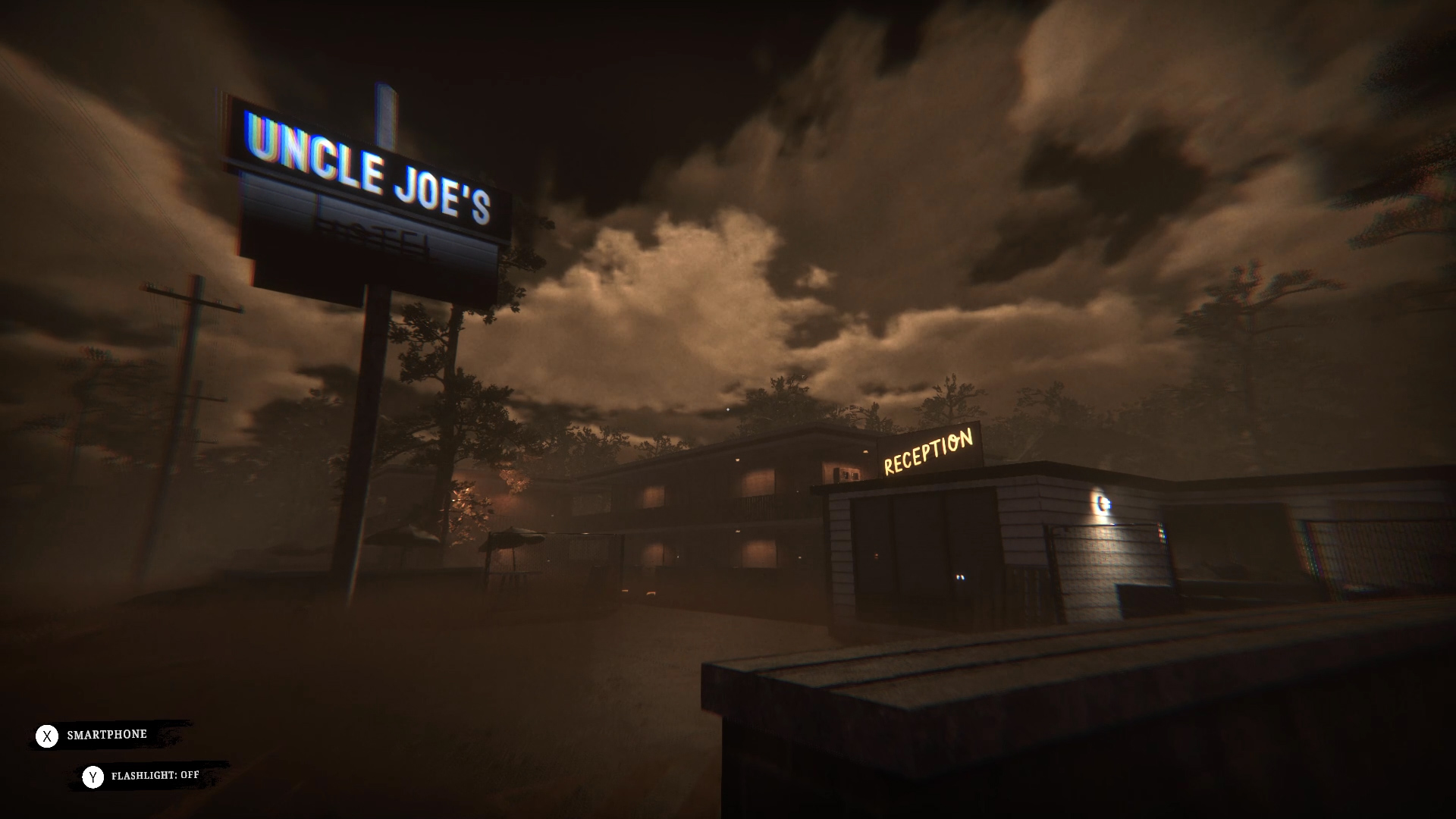
Creepy Shift: Uncle Joe’s Motel uses very subtle, minimalist sound effects due to its job simulator gameplay, which allows the player to take in its sometimes-soothing, sometimes-unnerving (but always exceptional) music ... and then the horror kicks in.
Review by Jay Wilson I never thought I’d play, much less enjoy, a job simulator. Why would I turn to escapist entertainment to perform the mundane tasks of everyday life? I want to rescue princesses from Mushroom Kingdoms, battle space pirates at the far end of the galaxy, or fight to the death in Mortal Kombat. Flipping burgers or scrubbing floors are things I’d rather pay other people to do. However, characters are the gateway into stories, and the right character at the right place in their life can make the most mundane task not only interesting but captivating. You see, repetitive tasks allow muscle memory to take over and leaves the mind free to dive deep and contemplate its current circumstance. And it’s here that Creepy Shift: Uncle Joe’s Motel wisely gives players control of Susan Doe, a down on-her-luck young actress with her own share of troubles and traumas in desperate need of reflection, weirdly allowing the monotonous gameplay to facilitate character development and storytelling. Our minds will drift and wander the same way Susan’s will. The game begins with Sue getting off the bus at the seemingly abandoned Uncle Joe’s Motel out in the middle of nowhere. She receives a call from the owner, Uncle Joe, and he gives her instructions on where to find the key, supplies, and delivers a bit of backstory on his haunted lodging. Indeed, something dark and sinister lurks beyond our world and is searching for a means of crossing over to claim a fresh victim, and our protagonist will need to obey the rules if she wishes to survive. 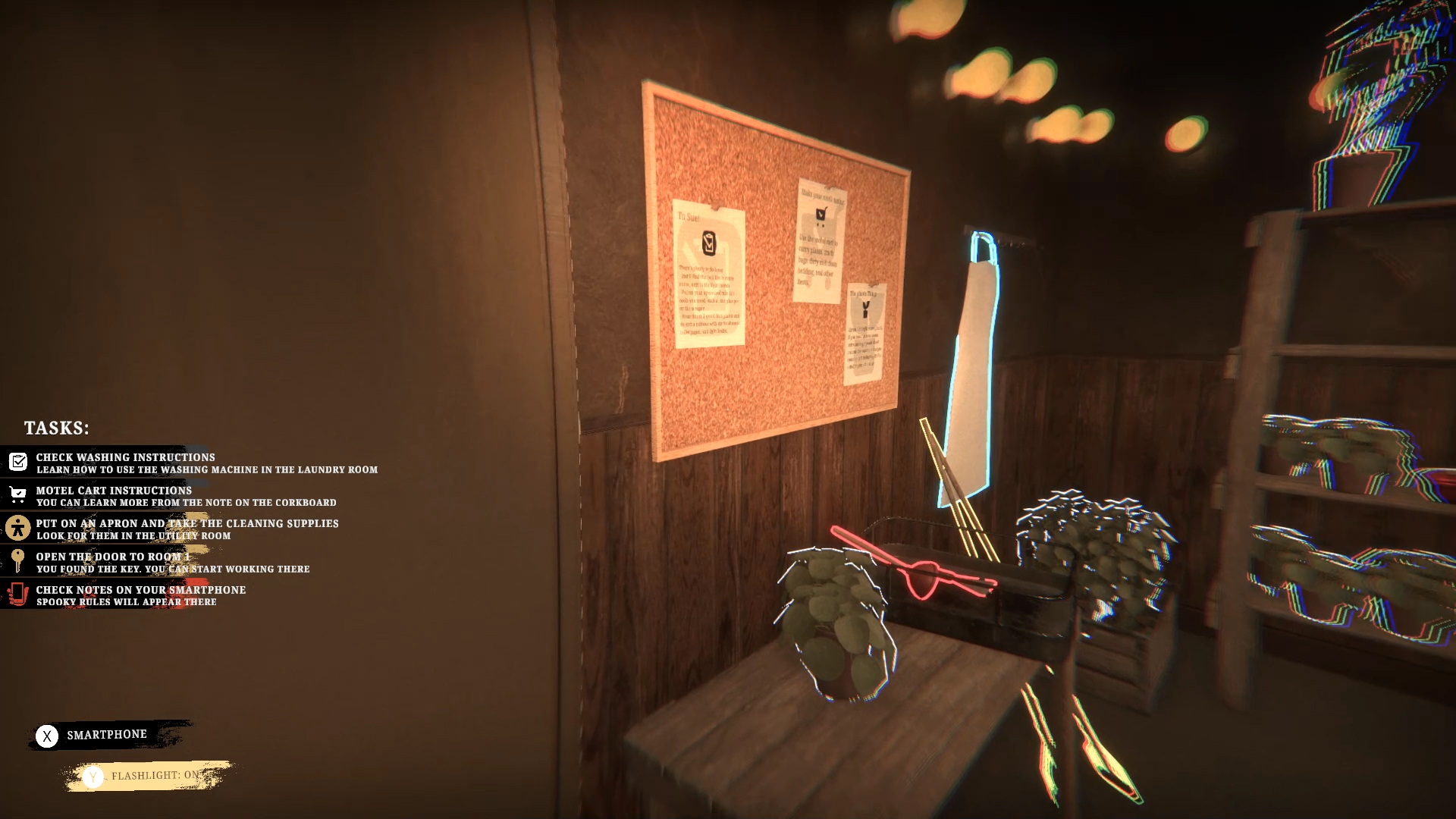
Some tools such as the plunger and scraper (highlighted in red) can be carried in the apron (highlighted in blue). Once equipped, you access them by looking straight down.
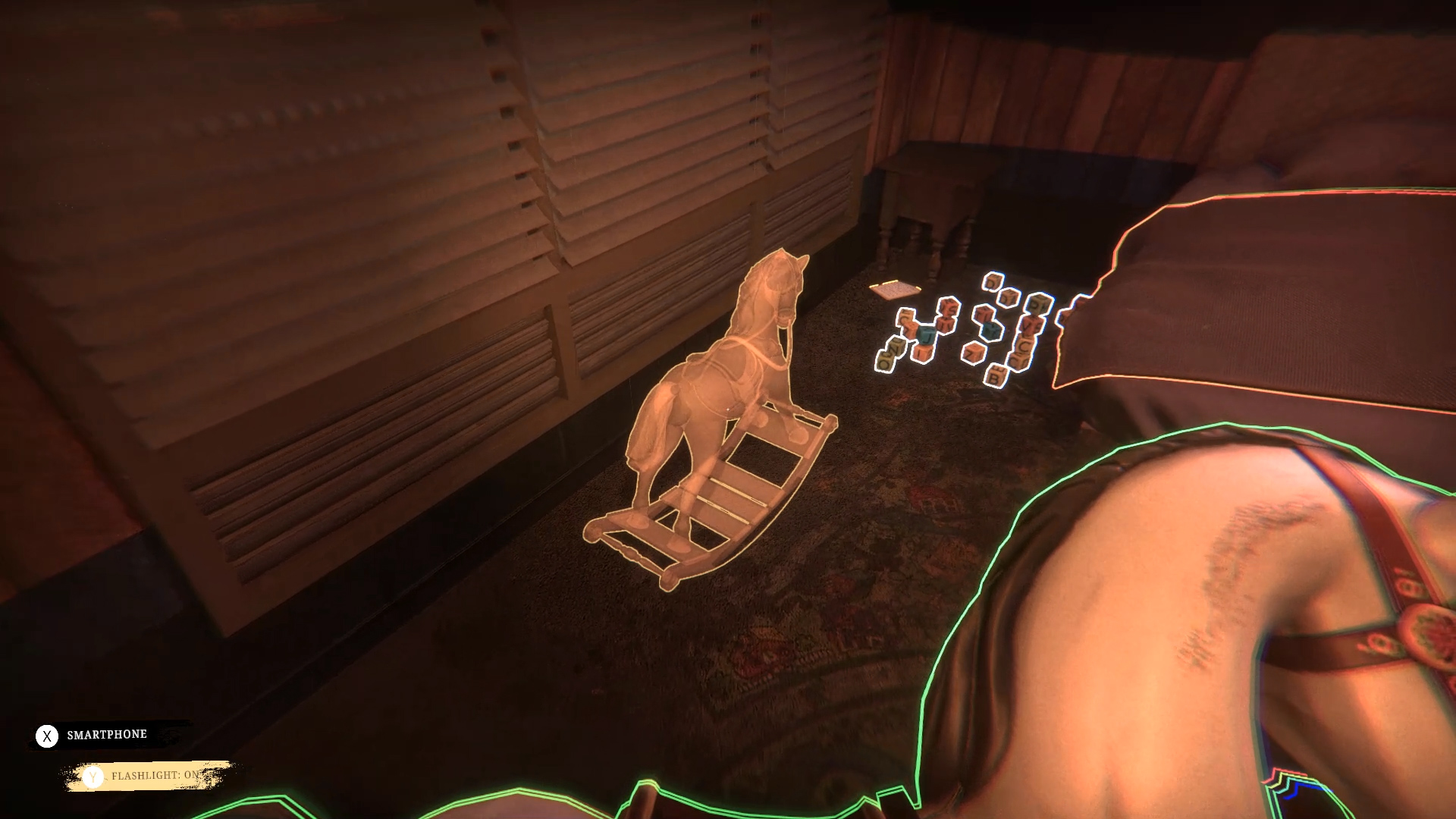
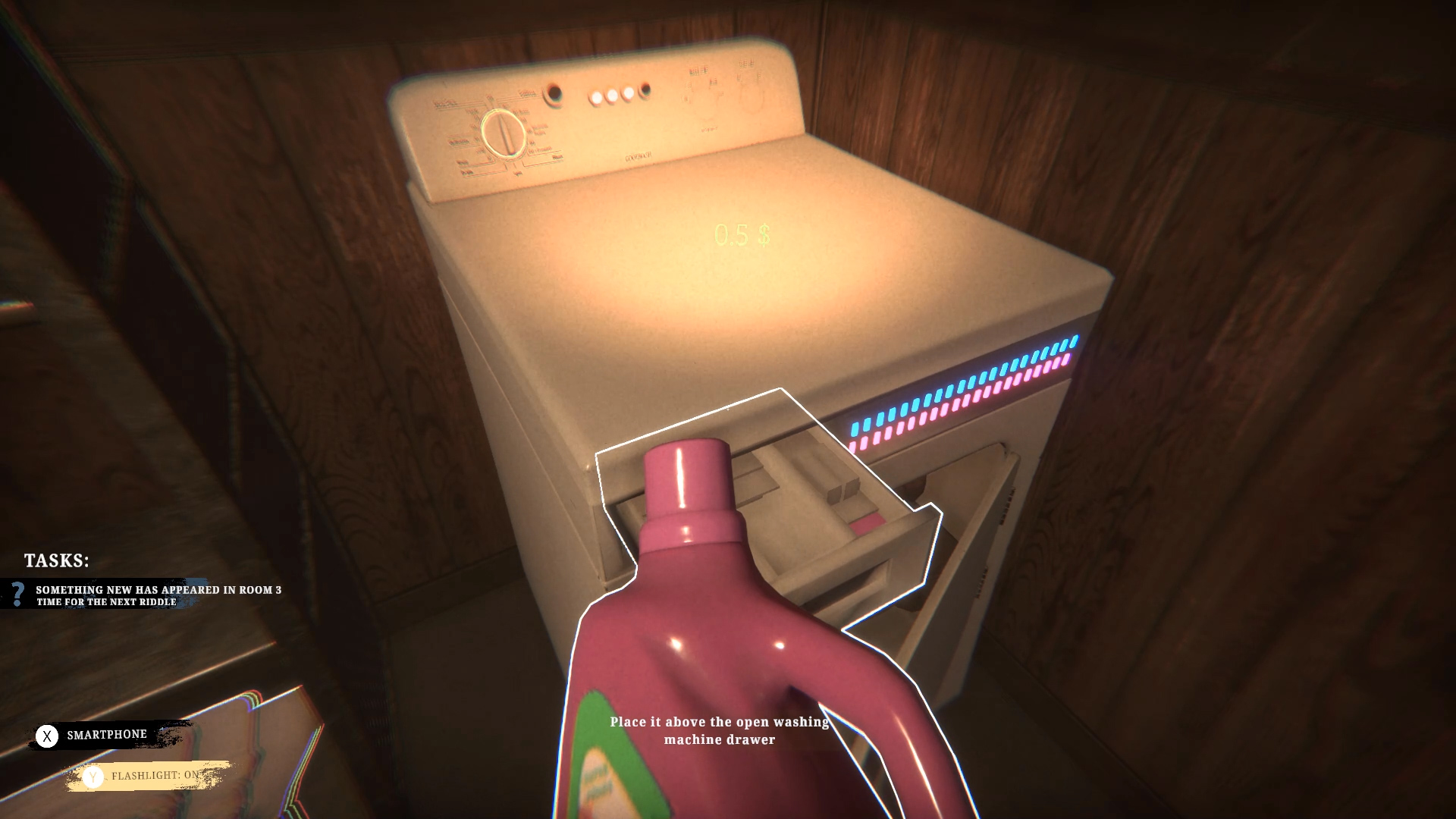
If the game expects you to place an item in a specific spot, it will indicate where said item goes while you're holding it. In this case, the toy rocking horse.
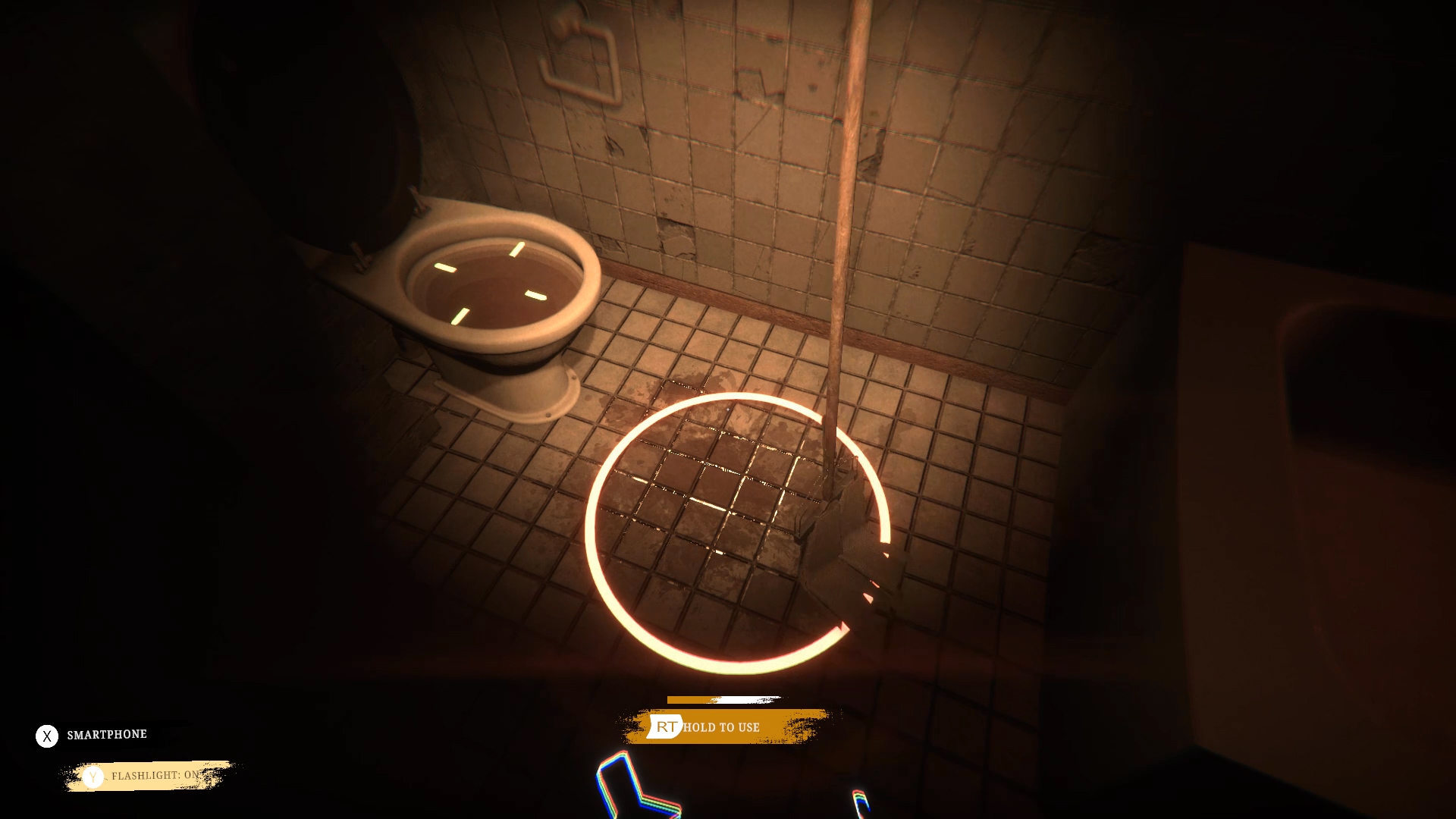
Darkness only poses a danger in the main areas of Rooms 1 through 6. The office, work room, wash room, Room 0, and even the bathrooms—all the bathrooms—are safe in the absence light.
The player, as Sue, sets to work cleaning the six themed motel rooms, and right from the get go Rule #1 comes into play: do not stay in dark rooms. The moment Sue sets foot inside, the music gives way to a muted, unsettling ringing as an eerie, snow-filled fog slowly fills the screen. For now, Sue can safely leave without the effects pursuing her; however, future rule-breaks will haunt her even if she steps outside, forcing her to deal with them before the evil overtakes and consumes her. At the moment, though, all she has to do is flip the lights on and continue with her job. A clipboard next to each door outlines her duties and even helpfully tracks her progress. Some tasks are specific to certain rooms (such as picking up toys, books, and unclogging a toilet) while others are universal (changing the bedding, replacing the toilet paper, and laying down a couple air-fresheners.) As Susan gets through her chores, the malicious spirit will try to break through again and need to be dealt with. And as the player makes their way through the motel, the evil’s efforts progressively become more and more aggressive, requiring more and more effort from the player to fend off but never overwhelmingly so (one of the more intricate solutions involves fumbling with a phone to take a picture.) Like many mystery-themed games, Uncle Joe’s Motel offers an array of clues scattered about for the player to find in the form of notes, lost and found items, or the condition of the rooms, themselves. And again, the mundane, repetitive nature of the gameplay actually benefits Uncle Joe’s Motel, for it allows the player’s mind to ponder each new discovery and speculate what happened to the individuals Sue is cleaning up after. Who were they? What were they up to? What brought them to this secluded lodging in the middle of nowhere? I thoroughly enjoyed abstractly vacuuming carpets, mopping floors, scrubbing furniture, and picking up cluttered messes, thinking about where the story is leading me while dreading the next time the power inexplicably goes out, the TV mysteriously comes on, a dead rat appears outside the door, or a swarm of cats with glowing eyes block Sue’s path. And even though horror is fundamentally about lack of control, Susan is secretly always safe until the player voluntarily puts her in danger because in video games lack of control is not terrifying, it’s frustrating. However, Uncle Joe’s Motel quite effectively creates the illusion that anything can happen anywhere at any time through the use of an internal timer, a timer that’s triggered by a specific condition. In other words, Rule 1 aside, nothing will happen to Susan until she enters that chapter’s room and starts tidying up. Then, and only then, will the game start an invisible countdown leading to, say, the dead rat, and because of said countdown, different players will be in different places doing different things when the rat actually appears. One player might be in the laundry room putting a load of bedding in the wash, another player might be picking up books off the floor, while another player might be right outside the door grabbing an air freshener off the cart. Heck, even the same player repeating the same chapter will likely end up tackling that room’s tasks in a different order and end up facing Rule #3 under a different set of circumstances. 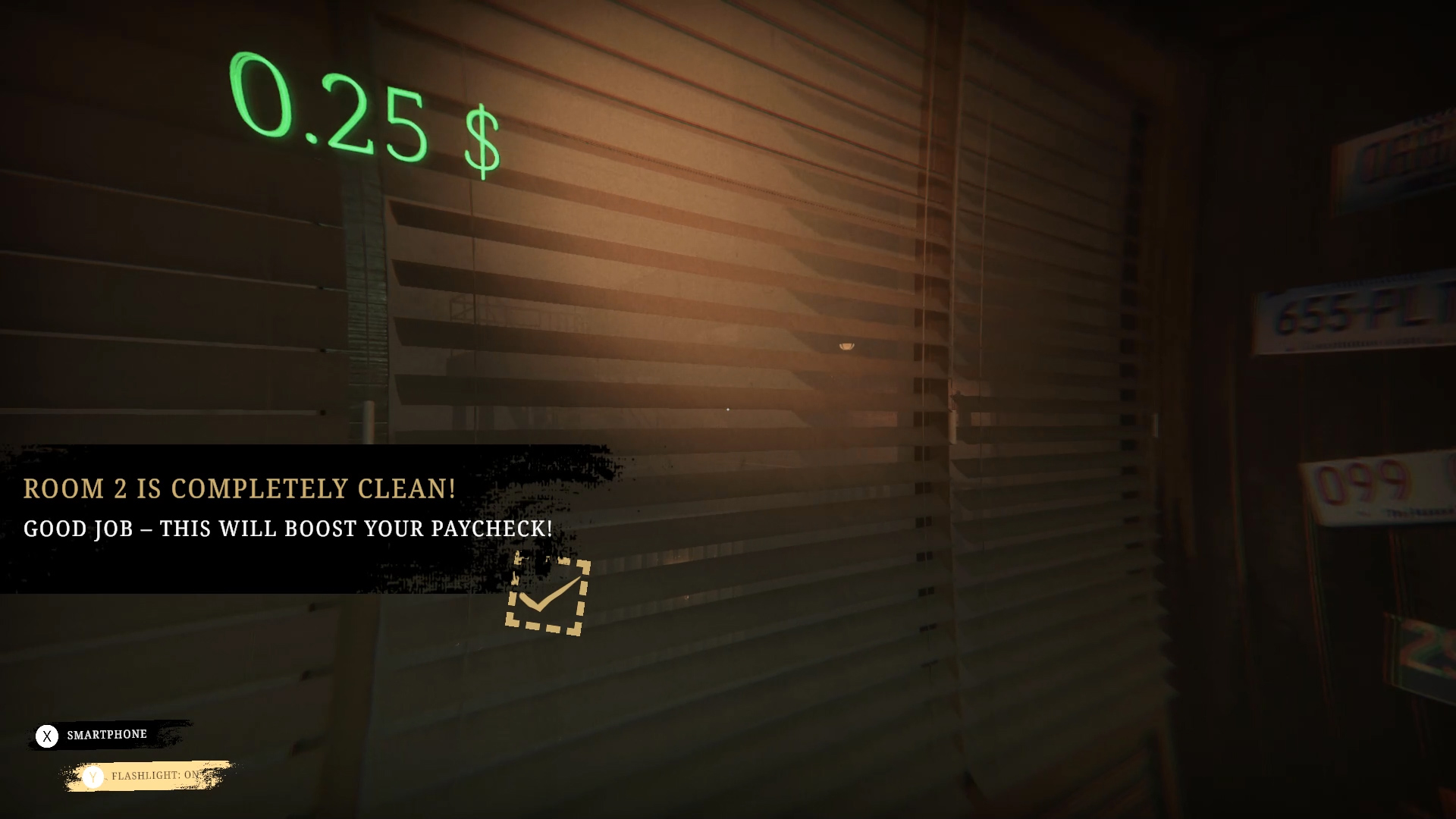
There’s more work to do around the motel than what Uncle Joe posted on the clipboards. Notice the completion indication on the left yet I still receive points (money) for closing the blinds.
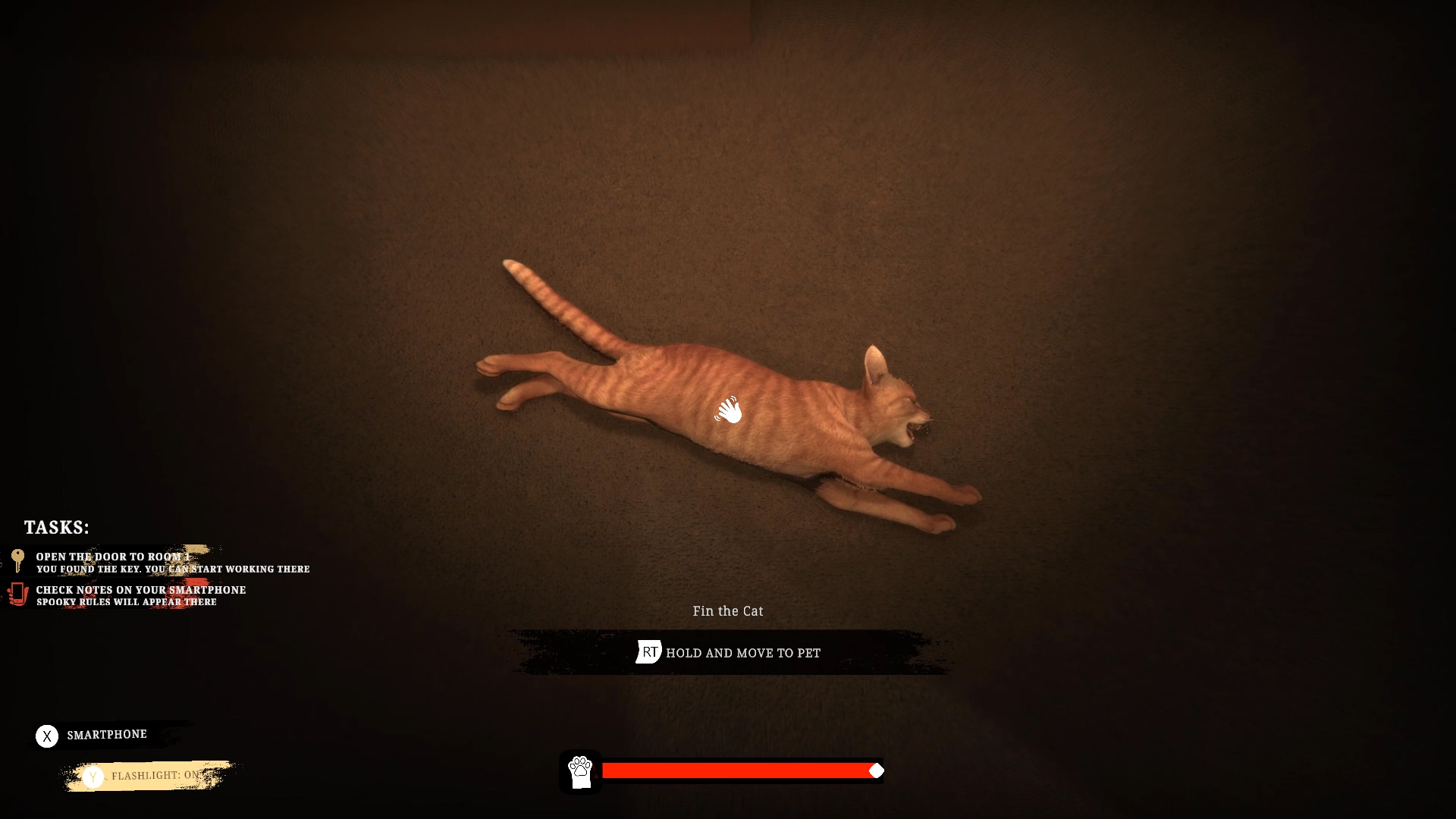
Plus, it never feels unfair because a unique, unmistakable audio/visual cue accompanies each threat, even when they don’t make sense (such as hearing the TV lullaby through multiple walls from hundreds of feet away.) And given that Rule 2 and on follow her outside—some of them even have solutions outside—it demands that the player know Susan is in danger. And you always know. This does not make the game any less unnerving, however, because jump scares can happen anywhere, and even though none of them will harm Susan, they will still scare the shit out of you. Plus Night Shift Team always places the source of the danger near that chapter’s room. For example, the game will not spawn a black cat (Rule #4) in the middle of the woods and expect you to go find it, nor will it make you visit a previous room to deal with, say, the TV lullaby (Rule #2). It will turn the lights off (Rule #1) in past rooms, forcing you to turn them back on when you revisit, but that’s it. However, that one exception plants the seed in the players mind that Susan is in more danger than she really is, and that seed will send them into a frantic search when they, in a panic, miss an important detail like where the hell the TV in Room 2 went when the lullaby starts playing. It’s ten feet outside the door in plain view. I missed it at first and rushed to Room 1, then the work room, then the laundry room, then the office before I finally spotted it and turned it off just in time. Never underestimate the human mind’s ability to overlook the obvious when freaking the fuck out. My only real complaint is the checkpoint system. First, there’s no indication you’ve hit a checkpoint. One could reasonably assume each room has its own checkpoint, and that assumption would be correct. The problem is unlocking the next room doesn’t necessarily have anything to do with fully cleaning the current room, and one could reasonably assume that fully cleaning the current room—which results in a prominent 100% completion banner, by the way—would be a checkpoint. It is not. I replayed Chapter 2 because I assumed wrong. Getting the key to the next room is the checkpoint, which leads to the other problem: checkpoints place you at the next door with said door open, and there’s things that happen between getting the key and opening the door. Specifically, hand-written notes appear warning the player about new rules plus sometimes a phantom will appear, foreshadowing a future revelation, plus Uncle Joe will call, shedding additional light on the story. None of these happen from a checkpoint. 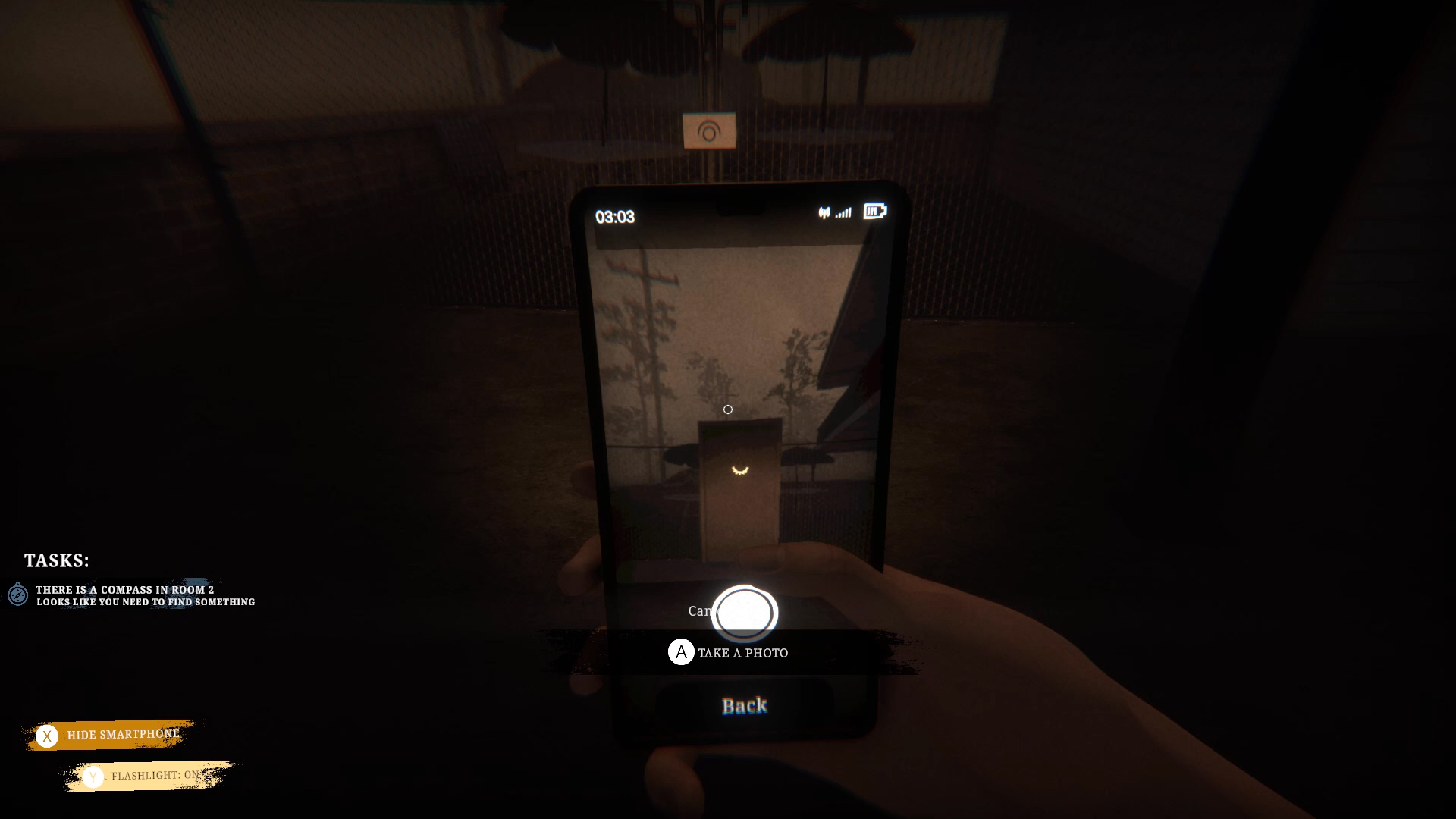
A common but effective horror trope: cameras see things the eye cannot, including hidden items, hidden doors, and secret collectable pictures hidden around the motel.
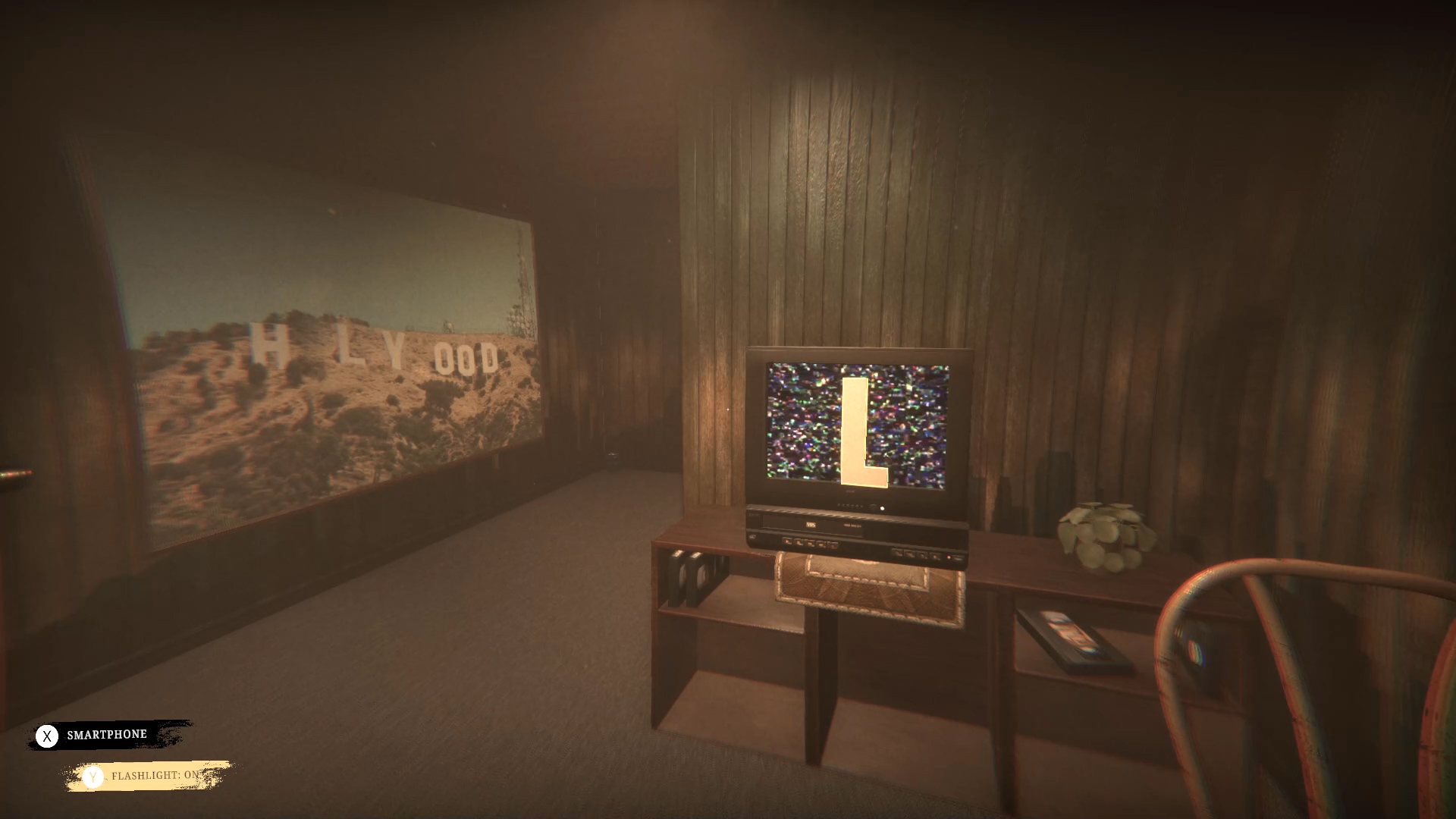
All of the puzzles are elegantly simple and intuitive. For example, the Hollywood sign missing letters, and a couple anomalous, interactive items in the same room present the answer using game mechanics already established.
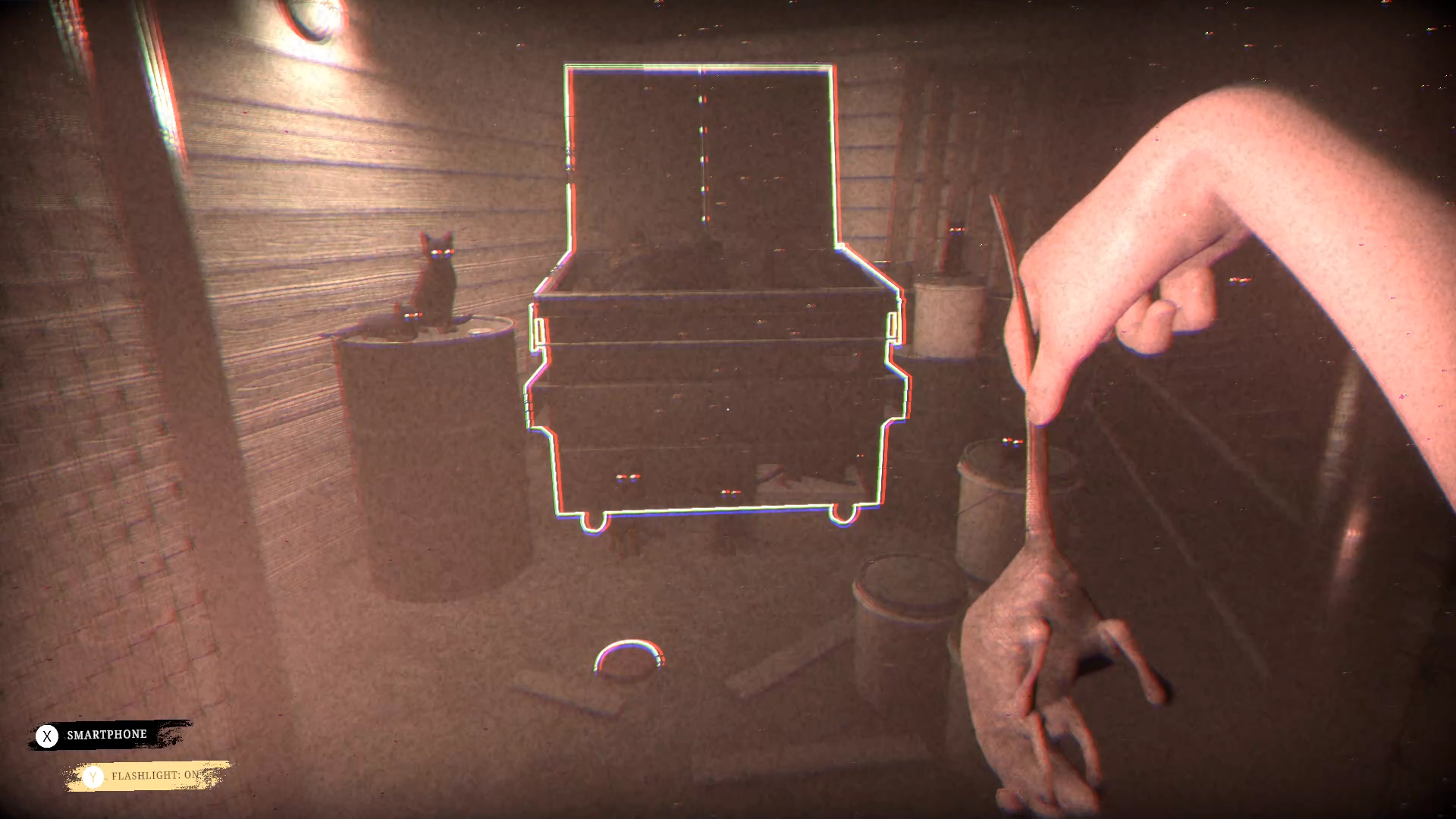
By Room 4, multiple evils manifest at once, such as the dead rat and black cats seen here. It’s not random, however. You always face the same rules (and combination of rules) in the exact same order.
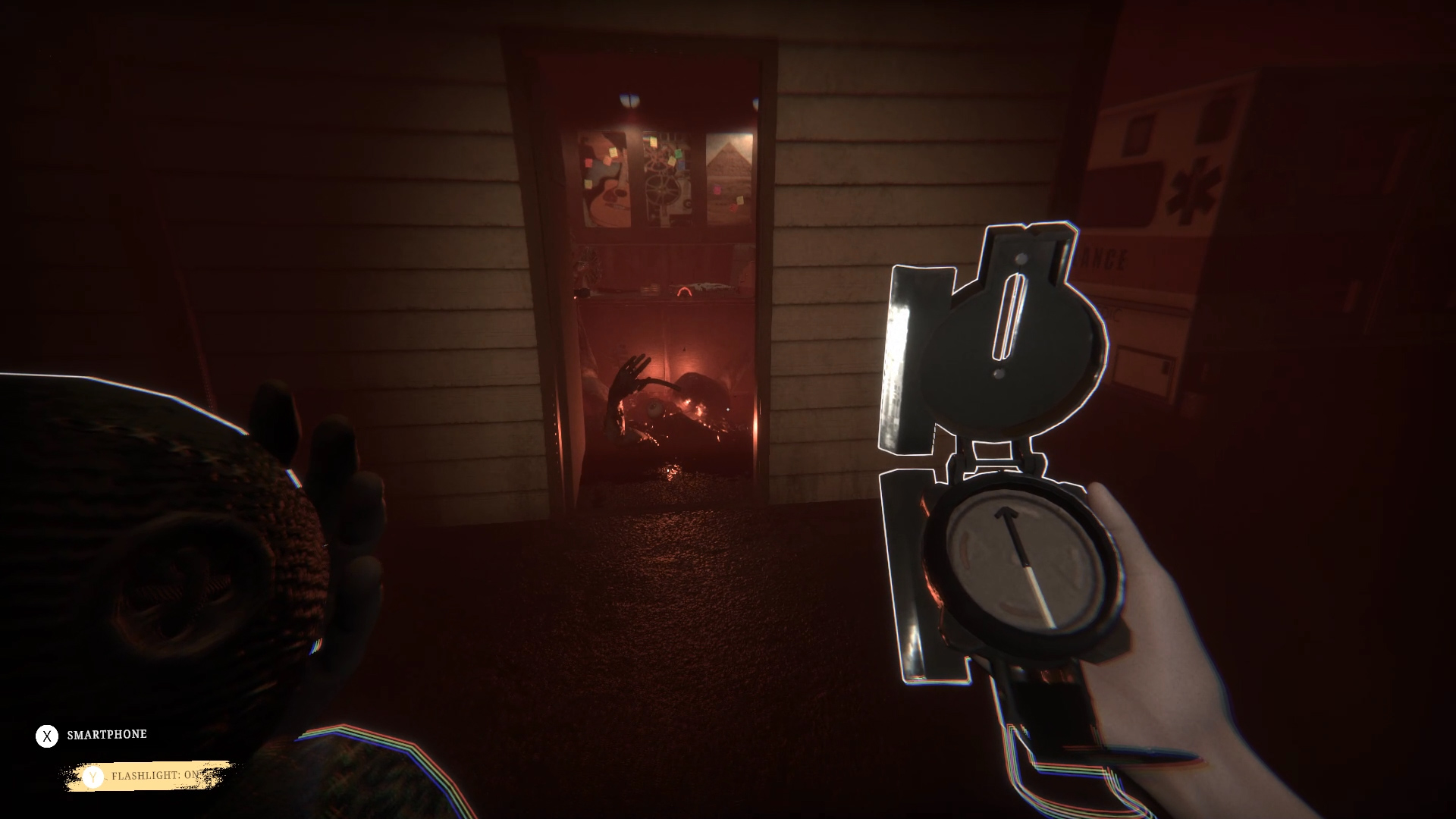
In the game’s climax, Sue confronts the evil directly with puzzles, empowered items, and a magic compass.
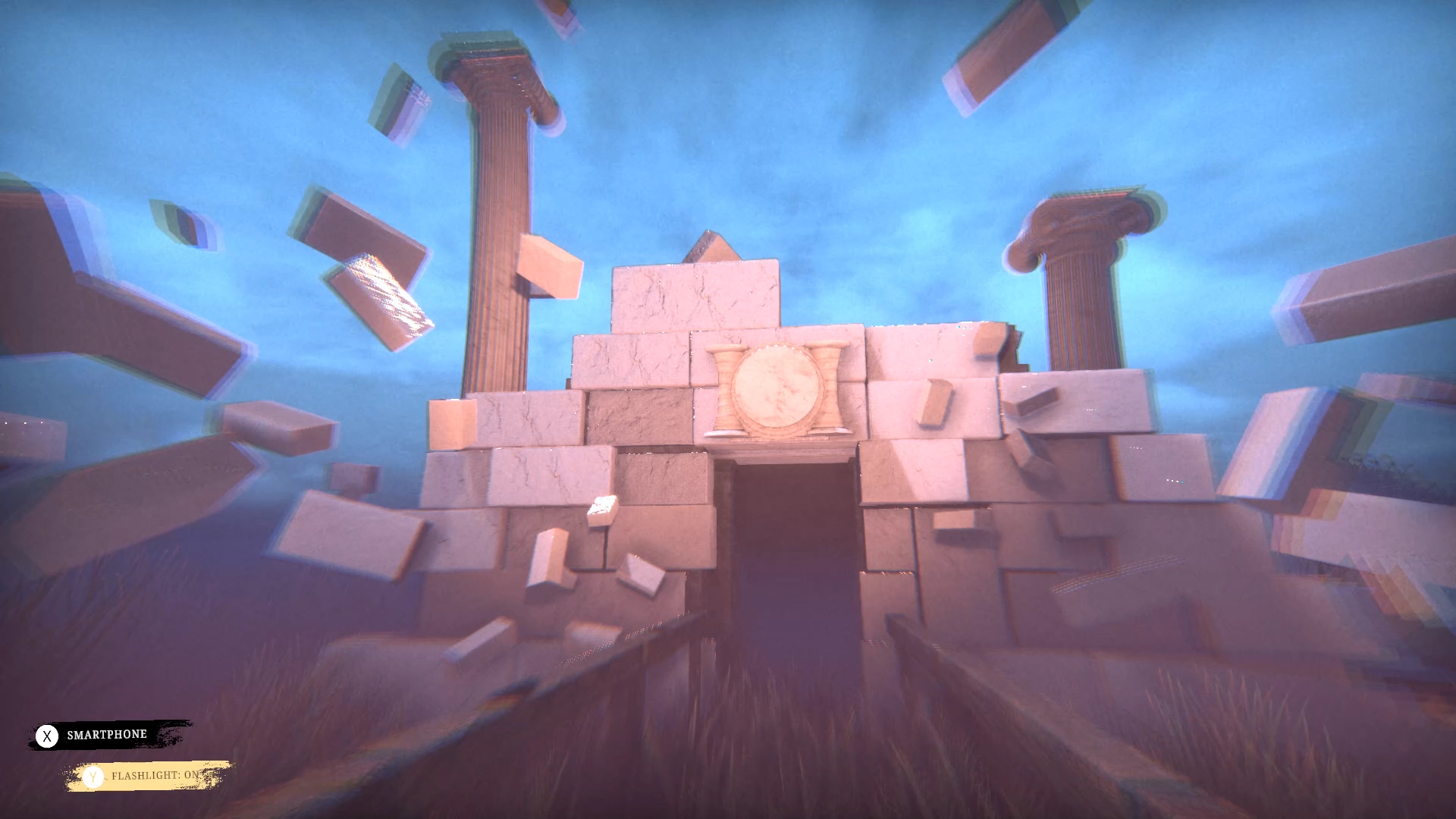
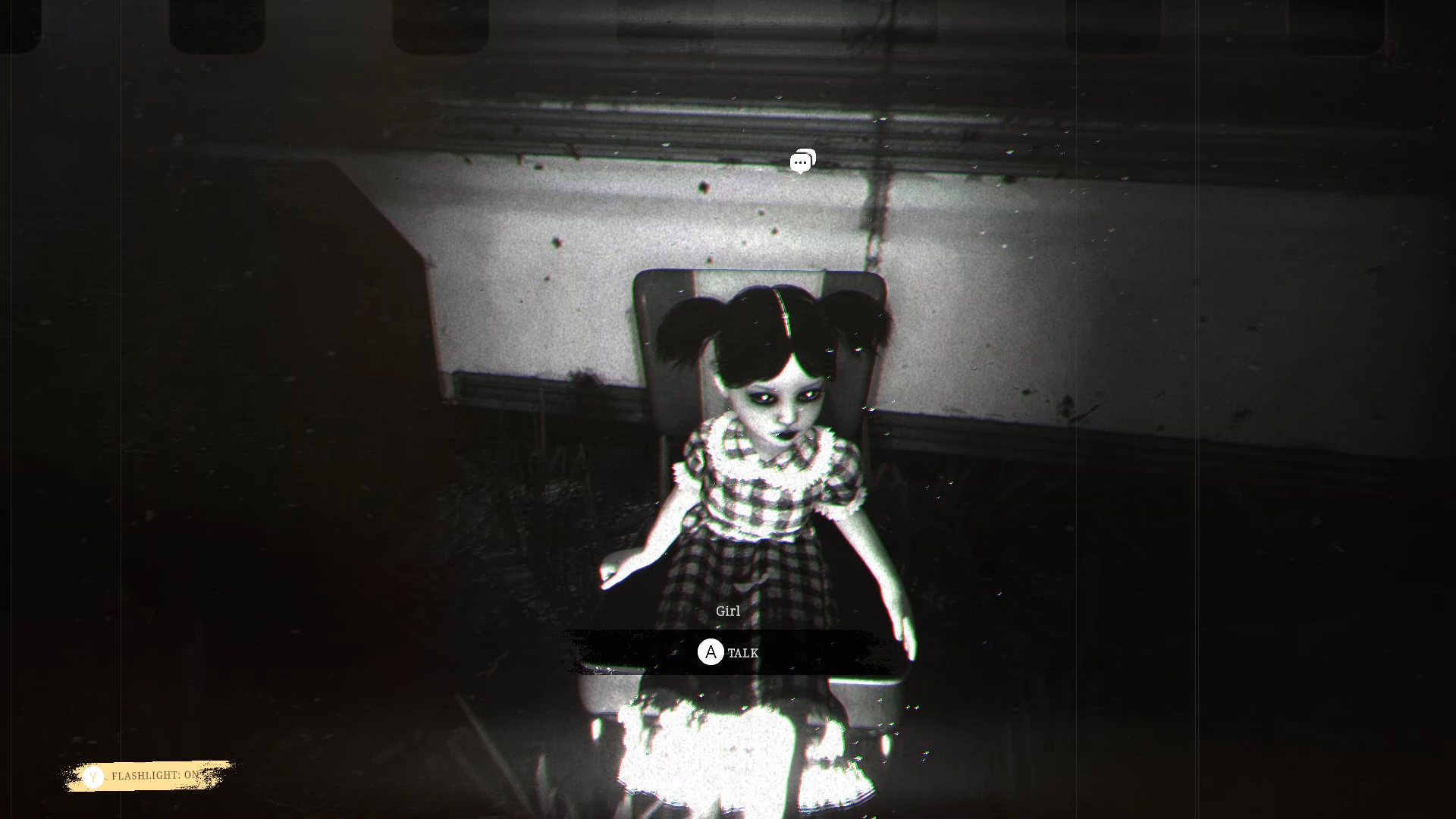
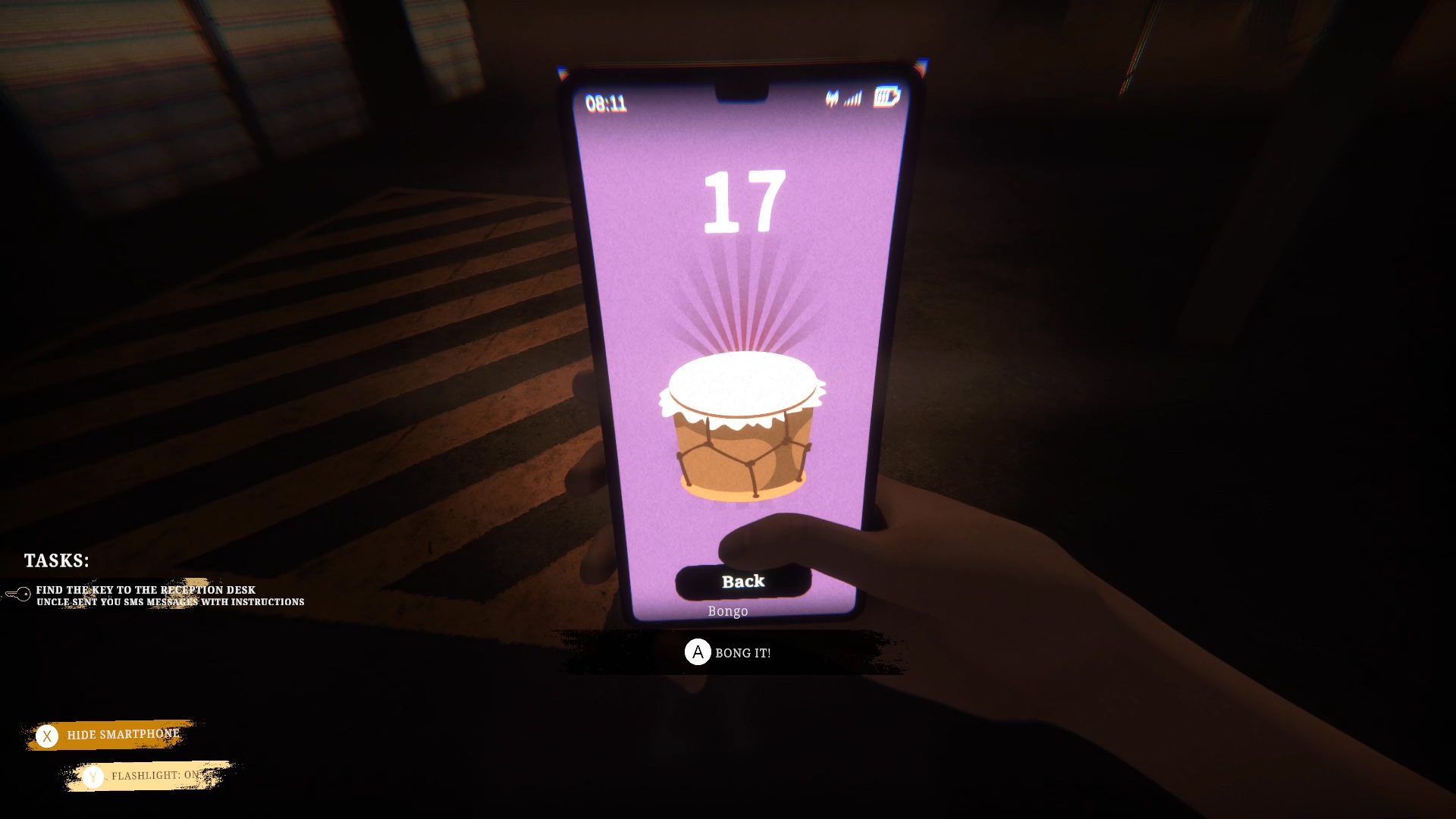
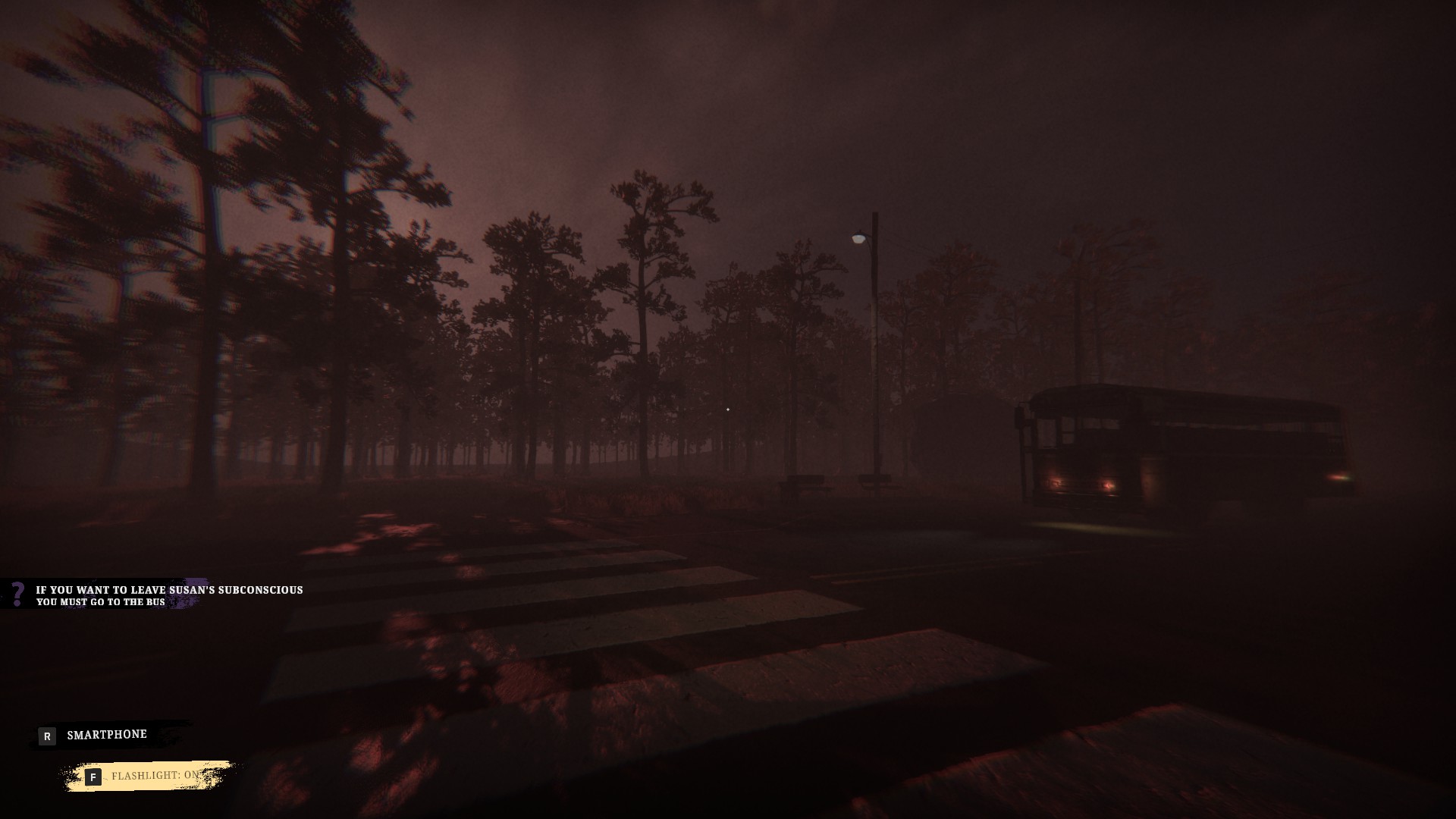
I initially played through in three separate sessions, so I missed a couple of these intra-chapter snippets, and to Night Shift Team’s credit, the story still makes perfect sense. The phantoms just add tension and atmosphere to a game already brimming with it, and hearing all the conversations between Joe and Sue just eliminates some ambiguity sooner rather than later. More pressing by far is missing the additional rules, which can get you killed. You can still access the rules in Susan’s phone, but typically in games like this the phone serves as an archive, and if you didn’t get the clue while exploring, it won’t show up in the archive, so you don’t think to check it randomly for stuff skipped between hitting a checkpoint and loading it. I even actively checked Susan’s text messages, which is one menu item up from the notes, and I still never thought to check the notes. And yes, I did, indeed, die because of this. Fortunately, when you die, Uncle Joe’s Motel spells out the rule you broke and helpfully reminds you to check the notes on the phone. I suspect the developers intended checkpoints as a safety net for in-game death and not for voluntarily exits due to real world commitments or bad decisions like, for example, starting a game late at night when you really need to get some sleep for an early rise the next morning. The cart gets restocked with bedding, air fresheners, toilet paper, and decorative plants, and then it gets placed right outside the next room as if Night Shift Team thought, “It might get annoying if players go through the trouble of dragging this thing back to the office, loading it up with supplies, and then dragging it to the next room only to die and have to do it all over again.” As a result, you can kinda cheat by getting the key to the next room, quitting to the menu, then loading the checkpoint and voila: you have a fully stocked cart right in front of the next room and zero distractions from unwanted phone calls or phantoms. All the garbage scattered about the motel’s exterior comes back as well as a couple resets for miscellaneous items inside the rooms. Then again, from Room 2 on you can pretty much skip cleaning entirely and come back at the very end when there’s no risk of dying, so I’m not sure how effective the teleporting/restocking-cart is for speed running. My issue, however, is that I actually wanted to see the phantoms and answer the phone, and I even wanted to run around with the cart, throwing dirty sheets and blankets in the wash, picking out the right air freshener, and loading up with TP, spare lightbulbs, and plants because I like to fully immerse myself in these games. You can actually drag a loaded cart up the stairs, but I didn’t do that because it seemed weird and unrealistic to me. Guess what, though? When I came back the next day and loaded my last checkpoint, there was the cart in front of Room 3 on the second floor with pretty much everything I needed. Then again, even if you don’t use the checkpoints, the very next chapter teleports the cart to the second floor anyway, so whatever. Anyway, I love that Uncle Joe’s Motel evolves from a job simulator where clues magically appear after cleaning the right corner of the room into a puzzle game where players have to figure out the combination to a locked chest, play instruments in the correct order, and my favorite: correctly arranging a series of large pots along a wall. You initially find them scattered around an Egyptian-themed room, and it’s not immediately obvious that they’re part of a puzzle. You may notice their colors appear off from one another, which I initially chalked up to an optical illusion caused by the lighting; however, after placing them side by side, it becomes apparent that they are, indeed, each slightly lighter or darker from each other. And when you look at the two sphinxes flanking them—one light and one dark—together, they form a gradient. A little bit of rearranging and, voila, puzzle solved. I also adore the dream-like horror aspect, and not just the nightmarish, black and white, playable montages at the end of later chapters where pretty much anything can and will happen. Even while cleaning the hotel, objects can mysteriously teleport, specters can materialize and float through solid matter, and ordinary motel bathrooms can become first a teenagers bedroom and then the dining room of a broken household. As the game progresses, Susan sees visions of a little girl searching for her teddy, she hears disembodied voices calling, yelling, and beckoning to her. She uncovers a children’s story about an evil witch that slowly seems to be coming to life and haunting our world, growing stronger and stronger as Susan’s grip on reality slowly slips away with each new revelation and paranormal manifestation. And by room six, you realize that it is, indeed, a dream—the blood, the body, the flashing lights—they all come from Sue’s subconscious. 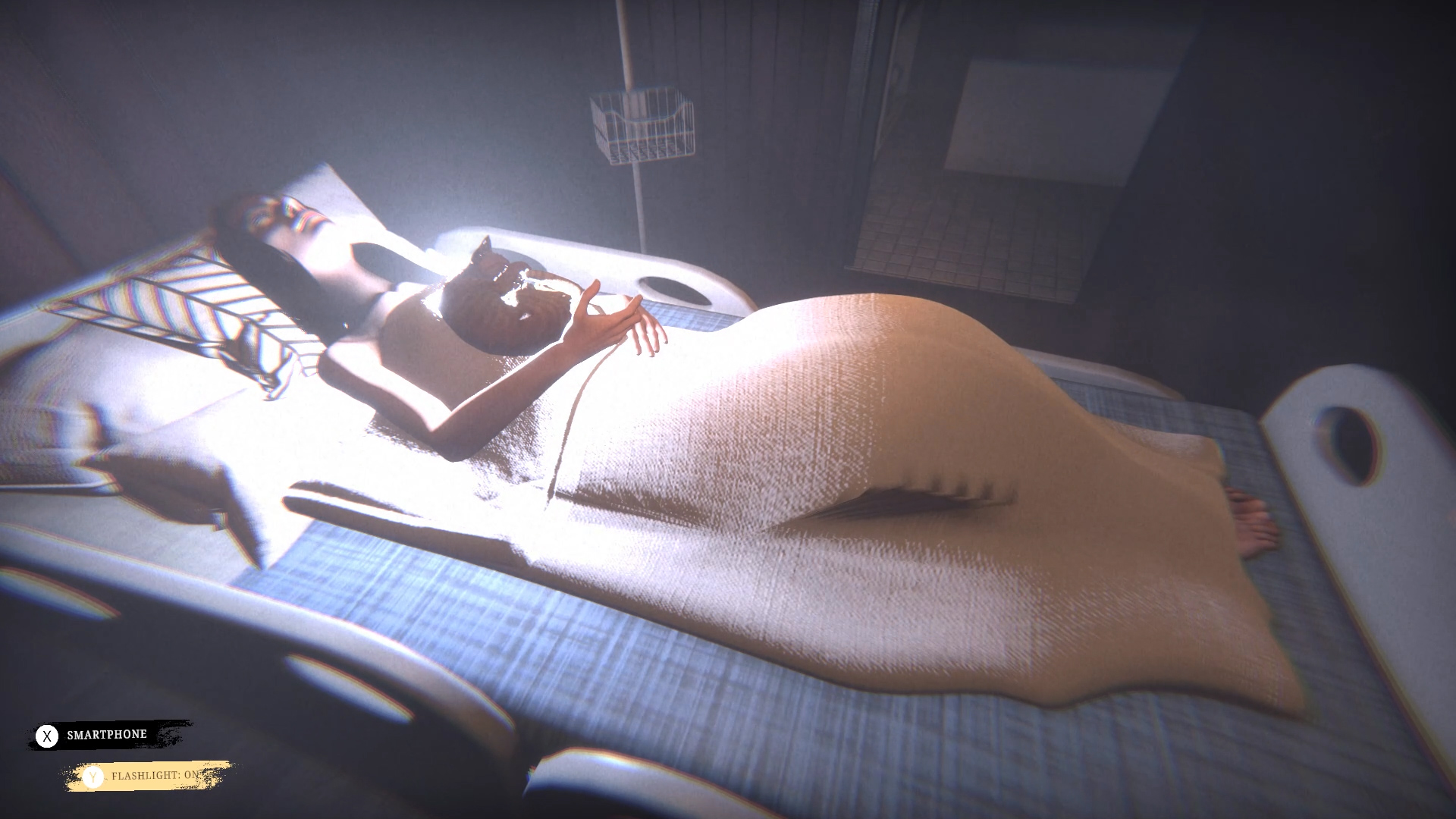
Uncle Joe's Motel expertly builds to and perfectly executes a standard but charming genre twist where a very flawed and vulnerable character has to deal with the repercussions of their decision, and the resulting arc is nothing short of powerful, heart-warming, and incredibly beautiful.
From her past. And that’s what I love about Creepy Shift: Uncle Joe’s Motel. It’s not a video game about cleaning motel rooms; rather, it’s the story of Susan Doe getting her life back. | ||||||||||||||||||||
| ||||||||||||||||||||
|
| ||||||||||||||||||||